
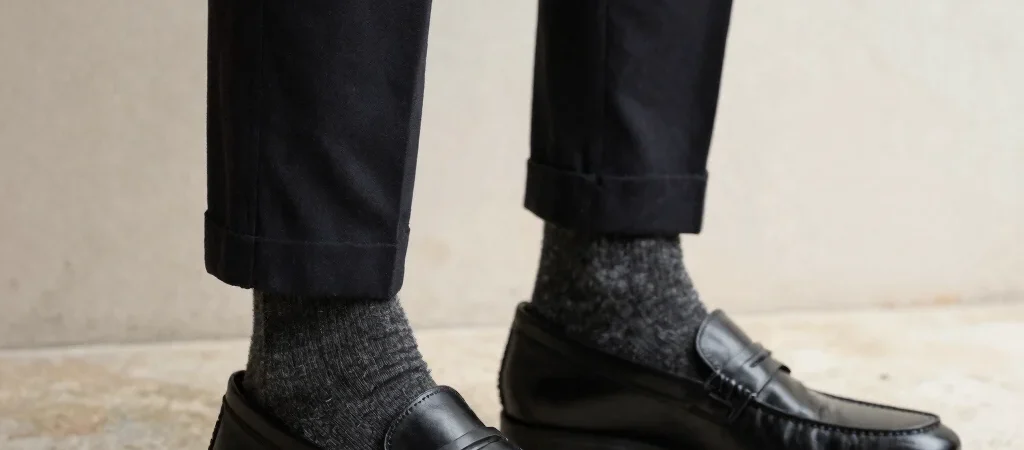
Loafers are often treated as the easy answer to a polished outfit. Then the trousers bunch over the vamp, or the bare ankle feels oddly exposed, and the pairing stops looking effortless. In practice, the hemline is doing more work than the shoe: it determines whether the loafer reads crisp, relaxed, or a little heavy.
Find the right break
With straight or tailored trousers, aim for a hem that skims the top of the shoe or leaves a narrow, clean gap above it. A small break keeps the line relaxed without piling fabric at the ankle. If you prefer a cropped cut, check the length while standing and walking; a hem that looks neat in a mirror can shift higher with every step.
Make socks part of it
A fine ribbed sock in a close shade to the trouser creates one quiet column, while a deliberate contrast makes the ankle a visible styling choice. Both can work. What tends to feel less resolved is a sock that peeks out by accident, especially when the trouser hem is already gathering above the shoe.
Balance the shoe’s weight
A substantial loafer with a thick sole usually looks more at home under a straight or wider trouser than beneath a very narrow, delicate leg. A slimmer leather loafer can sit comfortably with ankle-length trousers or a softly tailored skirt. Think about the whole outline, not just whether each item is considered a classic.
Read the leather in context
Polished leather brings a sharper note to denim and soft knits; suede tends to soften tailoring and works naturally with brushed cotton or wool. Neither finish is inherently more versatile—the surrounding textures decide how formal the shoe feels. Before changing the outfit, try a different hem length or sock. That small adjustment is often the difference between a loafer you wear and one that stays by the door.