
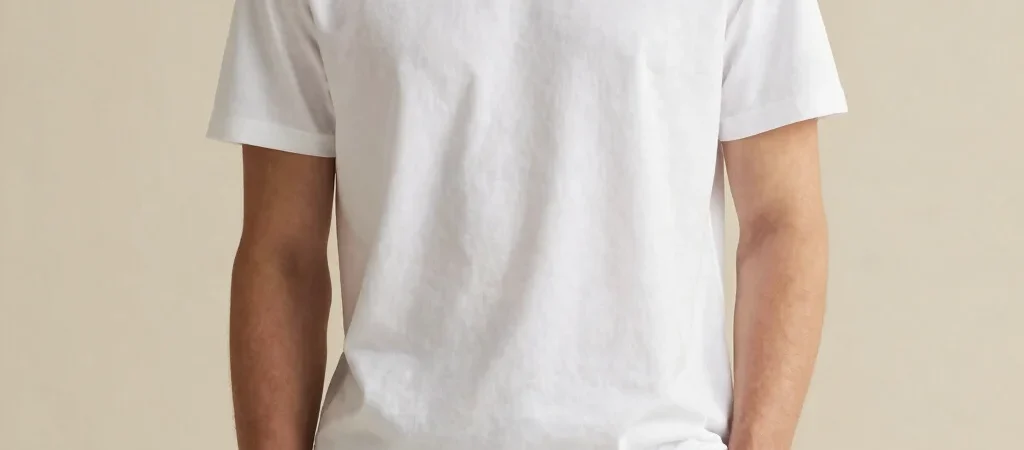
Two white T-shirts can hang side by side and have almost nothing in common. One is sheer and fluid, another dense enough to hold a clean line under a jacket. That distinction matters more than the idea that every wardrobe needs one perfect basic: the useful tee is the one whose texture supports the way you actually dress.
Notice the fabric weight
A lighter jersey drapes close to the body and layers easily beneath a cardigan or an unfastened shirt. Heavier cotton tends to keep its outline, making it a stronger partner for tailored trousers or a structured jacket. Hold the fabric up to the light and notice how it falls from your hand; that quick check offers a better clue than the word “essential” on a tag.
Let the neckline frame
A close crewneck gives a compact, almost graphic finish, especially beneath a blazer with a defined lapel. A wider neck feels softer and leaves more open space near the collarbone, which can balance a high-waisted trouser or a fuller skirt. Check the ribbing, too: a firm neckline keeps its shape, while a fine one reads more delicate.
Pair texture with texture
A smooth white tee against washed denim is an easy contrast, but it isn’t the only one worth trying. Dense cotton gives a tactile counterpoint to fluid satin or a soft wool trouser, while a lighter tee disappears more quietly under a textured knit. Keeping the palette simple lets those differences register without adding visual noise.
Choose for the way you wear it
If you tuck in your tees, a lighter fabric may sit more smoothly at the waist; if you wear one untucked, a firmer body can look more deliberate. Consider how the sleeve falls and where the hem lands with your usual jeans, not just how the shirt looks on a hanger. A good white T-shirt isn’t a universal answer. It’s a small, well-chosen piece of texture in an outfit you already know how to wear.